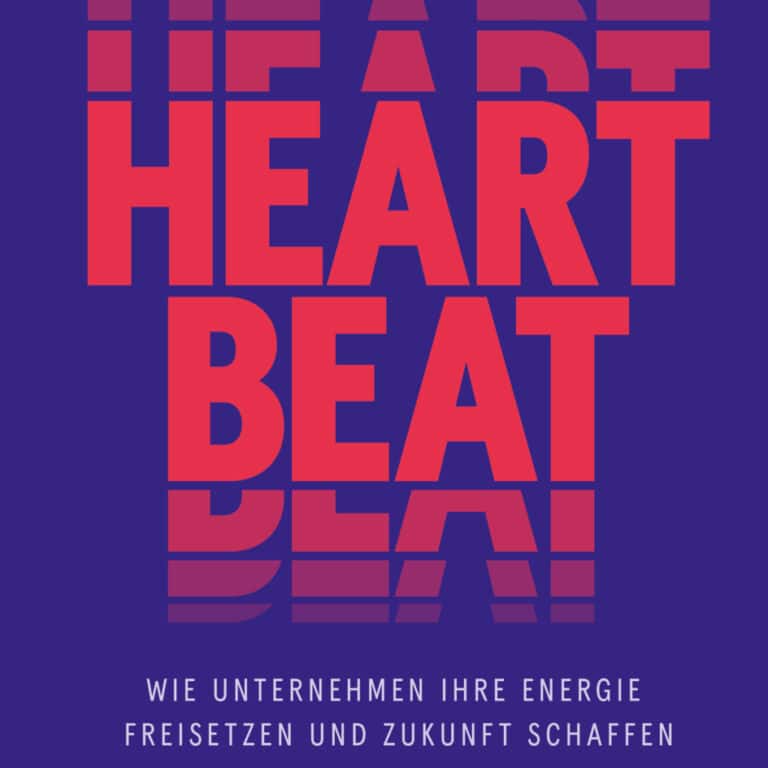
What does the future of HR work look like for companies in Switzerland, Germany and Austria? Answers are provided by the new «Trend Barometer: People Management 2035» by the University of St.Gallen, a study conducted in cooperation with the consulting firm PwC.
At its core, the study paints a picture of a twofold transformation: on the one hand, there are technological disruptions such as artificial intelligence and people analytics, and on the other, the profound change in corporate culture.
«People management must do both in the future: integrate new technologies and new forms of collaboration at the same tim«»says Heike Bruch, Professor of Leadership at the University of St.Gallen and Director of the Institute for Leadership and Human Resource Management.
«Without a strategic realignment of HR management, many companies are at risk of losing touch,«» emphasizes the leadership expert from the Institute for Leadership and Human Resource Management (IFPM-HSG) at the University of St.Gallen and technical director of this study.
The results of the study are based on a survey of 256 HR experts in 2025 and 315 HR professionals in 2022 in Switzerland, Germany and Austria. The respondents assessed the relevance, characteristics and future viability of key HR functions and skills in the period from 2022 to 2035. The quantitative survey was supplemented by trend analyses that provide a differentiated picture of development areas and strategic gaps in people management.
You are welcome to download our study here free of charge. Please enter your contact details in the following contact form. The study will then be sent to you by e-mail.
Preparation for new functions in personnel management
Although many central HR functions are strategically important in companies, they are practically still underdeveloped. The majority of HR specialists surveyed feel that they are insufficiently prepared in these areas of development. In terms of relevance in 2035, the gaps are particularly large for Data and technology management, development and career management, employee experience and in the integration of artificial intelligence. The authors of the study show: Although the relevance of these topics will increase significantly by 2035, the concrete preparation of many organizations is at a low level. The result is a structural gap between aspiration and reality in people management – with the risk of strategic goals being missed. This «misjudgement» can be costly.
Competence gaps in personnel management close
The analysis also shows that the strategic importance of almost all HR skills will increase significantly by 2035. However, the reality in the world of work is lagging behind. The gap is particularly glaring in key skills such as the effective use of AI, ethically correct use of AI, big data and people analytics as well as the willingness to experiment.
It’s not enough to buy AI tools – you also need to know how to use them strategically in your company“says co-author of the study Till R. Lohmann from PwC.
The authors see an acute need for action in the people management of companies: In the coming years, massive investments will have to be made in technical skills. Understanding people is also essential in HR management. Empathy is not a «soft skill», especially when recruiting and developing employees, but an important resource for putting together good teams.
Setbacks with «New Work»and a good working culture
A surprising finding: the prevalence of new work elements such as mobile working and virtual teams will decline between 2022 and 2025. The much-vaunted «modern work culture»is losing importance, especially with regard to culture of trust, self-competence and “Leadership with inspiration“. An alarm signal that also applies to Switzerland: although flexible forms of work are widely accepted in this country, their cultural anchoring often remains half-hearted. According to the study, the proportion of companies with a genuine role model function at top management level is just 16 %
«Sustainable transformation can only succeed with a culture that does not see change as a threat»says Marvin Neu from the Institute for Leadership and Human Resource Management (IFPM-HSG) at the University of St.Gallen.
The study identifies the biggest deficits – and thus offers a contribution to the current debate on the future of work. While in Switzerlandrecently often shortage of skilled workers, the four-day week and home office rules have been discussedthe analysis of the cultural and strategic prerequisites for solid collaborationfor solid collaboration.
Four key measures for better people management
The study formulates four central fields of action:
Firstly, digital skills need to be strengthened in a targeted manner, for example in dealing with big data, digital know-how and ethically practiced AI use.
Secondly the«People Experience»i.e. the experience of the employees should be seen as a strategic lever: If you want to retain talent, you have toattractiveness tangible improvement.
Thirdlyis a culturalr new start is needed – with managers who are credible role models for trust, agility and inspiration. This is the only way to close the gap between aspiration and reality in people management by 2035.
And finally, people management must renew itself and, first and foremost, increase its own attractiveness. Since strategic HR–tasks around AI and cultural transformation strong in importance it is important to find the best talents attract and retain the best talent.
«Good people management is becoming a decisive factor for the future viability of companies»is the conclusion of study director Heike Bruch.
This study by the Institute for Leadership and Human Resource Management at the University of St.Gallen in cooperation with PricewaterhouseCoopers (PwC) follows on from the study “People Management 2025“ (Bruch, Lohmann, Szlang & Heißenberg, 2019).
This was based on a survey of 155 HR experts conducted in 2019 together with the German Association for Personnel Management (DGFP). The study followed in 2022 «Trend Barometer: People Management 2030», in which 315 HR experts were again surveyed in collaboration with the DGFP. This study also builds on this established cooperation: In the current survey cycle, 256 HR experts in Germany, Austria and Switzerland commented on current developments in people management.